

5 Benefits of Massage & Bodywork
1. Reduces Depression, Anxiety, & Stress
Massage has been proven to help reduce stress and anxiety and even help manage depression. Whether stress and anxiety come from school, work, or finances, consistent massage treatment can positively affect a human's physiology and psychology. James Lake, MD, writes, A massage can also alter EEG activity, decrease cortisol levels, [and] increase the activity of the parasympathetic nervous system, which acts automatically to calm the body and brain during stress."
Stress, anxiety, and depression can have a detrimental impact on the body's well-being. These stressors and experiences can be integrated into the muscle tissues and manifest as physical pain. This can lead to a sedative life, perpetuating dis-ease in the body, deepening stress and anxiety.
Although not a cure for depression, massage can be a tool for managing a client's stress and cultivating healthy coping skills for dealing with anxiety and depression. Depression is complex, and the range in severity for each individual can depend on a variety of factors. Massage can help, but it has its limits. It might be in the client's best interest to seek alternative paths to wellness, such as meeting with a psychologist, a dietitian, a Mindfulness-Based Stress Reduction Coach (MBSR), or even a primary care doctor.

2. Improves Sleeping
Sleep is vital to health and well-being. It allows the body and mind to recharge and fight off sickness and disease. The CDC recommends that adults sleep seven or more hours a night. But getting a good night's sleep can be challenging for many reasons. Sleep can be disrupted by snoring, sleep apnea, pain, and insomnia due to environmental causes such as overworking and mindlessly scrolling on the phone into the night. These reasons can prevent an individual from getting a night of quality sleep and disrupt a person's day-to-day lived experience. A poor night's sleep can even lead to more serious chronic issues such as cardiovascular issues, diabetes, obesity, and depression.
Massage can help regulate individuals with sleep-related issues by reducing stress, lowering cortisol levels, and increasing serotonin and dopamine. Stress reduction has been proven to improve sleep quality. Massage can also help relieve overall body aches and pains, such as arthritis, headaches, and back and neck muscle tension. Many individuals struggle to get a good night's sleep because of their pain, and in reverse, not sleeping well can increase and make the pain worse. This cycle can worsen exponentially over years, months, and even days.
Overall, massage can have a profound impact on an individual's sleep. The best massage modalities for sleep-related issues, but not limited to, are Swedish, Deep Pressure, and Trigger Point Therapy. These modalities can release tension and prepare the body for a good night's sleep.
3. Improves Balance and Posture
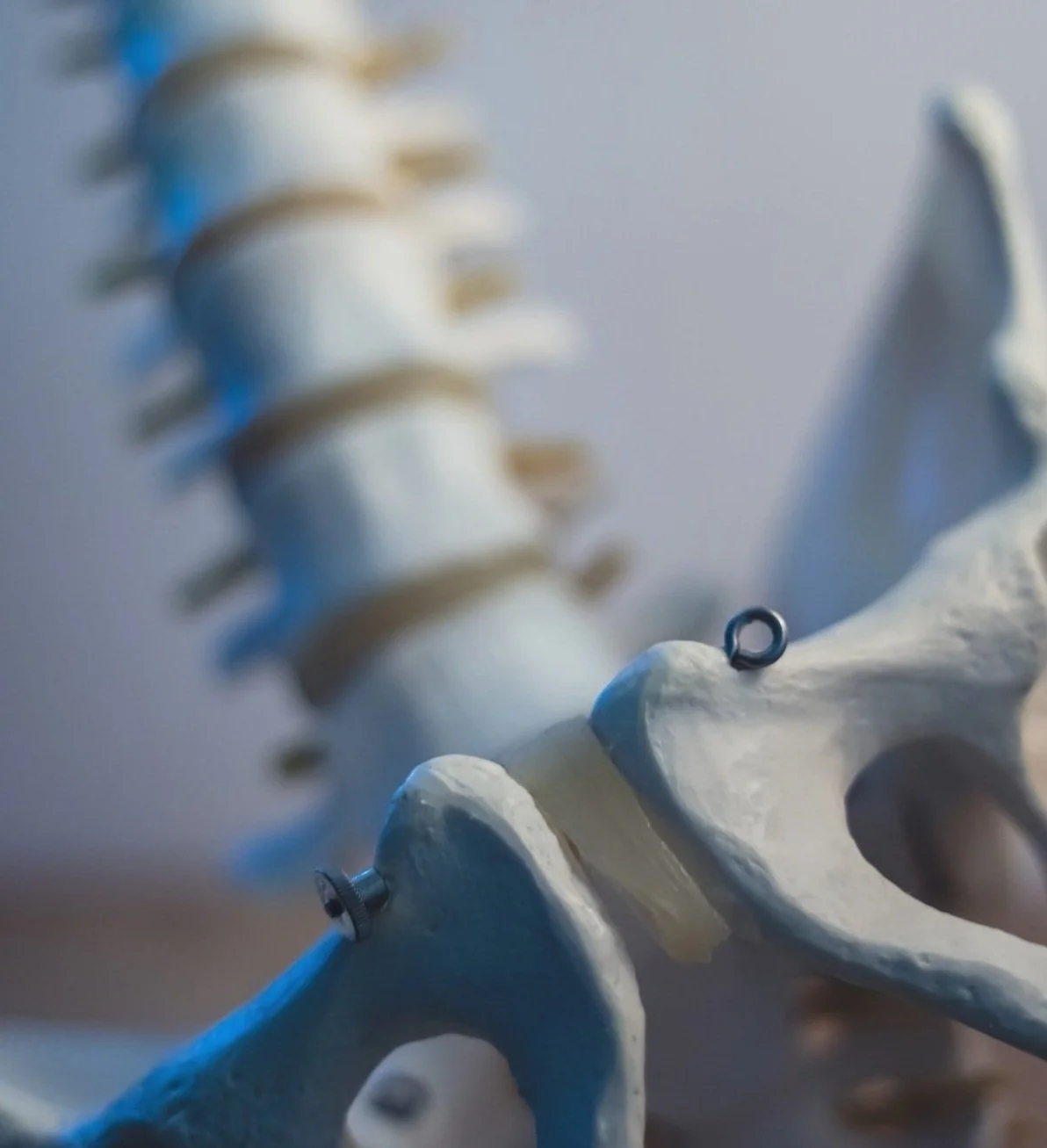
The experience of tensegrity is best described as bones floating in the body, held together by the tension in muscles and fascia in a balanced nature. When muscles are hypertonic or dysfunctional, they disrupt the integrity of a client's posture by pulling on the bones floating in the body, disrupting their functional patterns and mobility. ( It can cause systemic postural issues throughout the body, and pain does not have to be local to the postural imbalance.
Pain can manifest in the hypertonic tissues when the body is out of balance, and posture is disrupted. Clients can lose range of motion in their arms, shoulders, neck, hips, legs, and feet, leading to more severe issues such as chronic muscle fatigue and inflammation, as well as more subtle, unexpected problems such as heartburn, slowed digestion, and constipation.
Massage has been known to help improve postural imbalances because of its connection to "restore muscle balance and function, restore appropriate activation, decrease spasms, correct postural imbalances, or improve gait or movement confidence, [and] it may have a beneficial effect on postural stability." Massaging hypertonic muscles brings the body into equilibrium and a healthy tensegrity between the bones and the surrounding connective tissues.
4. Reduces Chronic Pain
Chronic pain can manifest in many ways for a person. And over time, if not managed, it can lead to more pain. Chronic pain can lead to muscle tension, reduced circulation, inflammation, and a reduced range of motion, ultimately perpetuating a more profound discomfort. Massage can offer a break in that cycle by moving body fluids, increasing range of motion, and helping clients reduce swelling and inflammation.
Massage modalities such as Swedish, trigger point, myofascial, and lymphatic massage have positively affected clients with chronic pain. Common types of chronic pain include neck and back pain, sciatica, carpal tunnel, etc. Many chronic pains are related to habitual patterns of the clinic and or old injuries. That said, a massage is nearly always indicated for chronic pain. The only time massage night is not the best option is if a client is experiencing a flare-up or the pain has become acute; in that case, the massage should be postponed and referred to their primary care doctor.
5. Increase Joint Mobility and Muscle Flexibility
Movement and flexibility can be accomplished through massage. A joint with a full range of motion can help prevent injury to the joint and the body as a whole. When injured, the body wants to protect that area at all costs. Some joint mobility pathogens include Arthritis, Osteoarthritis, Rheumatoid Arthritis, and Bursitis. The general symptoms of these pathologies are inflammation, loss of range of motion, joint stiffness, and much more. This, paired with careful passive stretching, can profoundly increase a person's ability to move and live pain-free.
Massage can be a great way to address joint-related issues. "As Claire Gavin, a Toronto-based RMT, explains, "massage helps relieve pain and eases the muscle stiffness associated with arthritis by improving circulation, helping to reduce inflammation. That translates to enhanced blood flow to arthritic joints, improved movement, and reduced pain.
SOURCES:
Lake, James MD, Massage Therapy for Anxiety and Stress: Regular massages can significantly reduce stress and anxiety. (Oct. 2018) Published in PsychologyToday https://www.psychologytoday.com/us/blog/integrative-mental-health-care/201810/massage-therapy-anxiety-and-stress
Pachaco, Danielle, “Why do we need Sleep” (Dec. 2021), “Published in Sleep Foundation https://www.sleepfoundation.org/how-sleep-works/why-do-we-need-sleep#:~:text=Sleep%20is%20an%20essential%20function,the%20brain%20cannot%20function%20properly.
CDC.gov “Are you Getting Enough Sleep?” https://www.cdc.gov/sleep/features/getting-enough-sleep.html
Kennedy, Ann Blair,“Massage Therapy Can Help Improve Sleep” (Oct. 2012) Published in AMTA Massage https://www.amtamassage.org/about/position-statements/massage-therapy-can-help-improve-sleep/
Deshong, Alison, “Can Massage help you Sleep, (Mar 2021) Published in Sleep.org ”https://www.sleep.org/sleep-hygiene/can-massage-help-you-sleep/
“3 surprising risks of poor posture” (Feb. 2021) Published in Harvard Health Publishing, https://www.health.harvard.edu/staying-healthy/3-surprising-risks-of-poor-posture
JoEllen M. Sefton, Ceren Yarar, Jack W. Berry, “Six Weeks of Massage Therapy Produces Changes in Balance, Neurological and Cardiovascular Measures in Older Persons” Published in Int J Ther Massage Bodywork. https://www.ncbi.nlm.nih.gov/pmc/articles/PMC3457720/#:~:text=If%20therapeutic%20massage%20(TM)%20can,beneficial%20effect%20on%20postural%20stability.
Red Canyon Physical Training, “Dry Needling as a Treatment for Chronic Pain” (may 2019) https://redcanyonpt.com/dry-needling-as-a-treatment-for-chronic-pain/
Arthritis Society, “ Using Massage to treat Arthritis,”(2022) https://arthritis.ca/living-well/2018/using-massage-therapy-to-treat-arthritis-pain#:~:text=As%20Claire%20Gavin%2C%20a%20Toronto,%2C%20and%20reduced%20pain%2C%E2%80%9D.
