

What is Massage & Bodywork?
Massage and bodywork are forms of healthy touch offered for pain relief, relaxation, stress reduction, structural balance, and emotional healing. Regular massage or bodywork can change how we feel about and engage with our body, which can ultimately change how we engage with others and experience the world around us. Below is an overview of the many types of massage and bodywork that I use in a treatment session.
Types of Massage and Bodywork
Swedish:
Swedish massage is one of the most common types of massage, and is primarily used for relaxation and rejuvenation. A typical Swedish massage provides light to medium pressure and includes various massage techniques and motions. Oils, creams, or lotions are used to create a calming environment, and aromatherapy can also be incorporated to enhance the experience.
Deep Tissue:
Deep tissue massage is similar to Swedish and can be integrated into a Swedish massage without any significant adjustment to the treatment. The main difference is the depth of the applied pressure. A deep tissue massage consists of slow, broad strokes, with some strokes lasting up to two minutes. This allows the therapist to engage deeper layers of tissue and muscle to release bound-up restriction and tension. Oftentimes, this massage approach leads to slight soreness, similar to that of yoga or stretching. This is normal. Drink lots of water and stay active to more fully integrate the benefits of this approach.
Trigger Point:
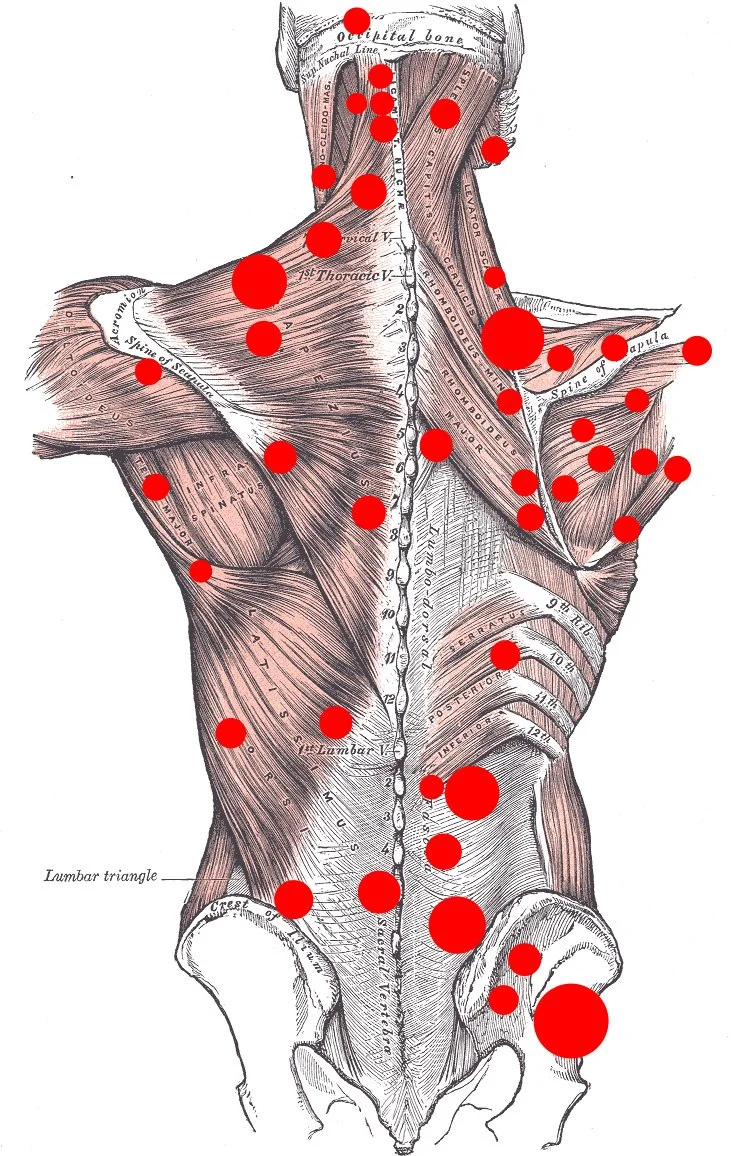
Trigger Point Therapy can increase joint range of motion, improve flexibility, enhance postural health, and improve blood flow and tissue health. When individuals use their muscles excessively, the surrounding tissues/fascia can form adhesions (i.e., tissue gets stuck and tangled with itself). These adhesions may restrict joint range of motion and pinch nerves. Trigger Point Therapy targets specific adhesions and points that refer pain to other locations within the body. This modality differs from deep tissue work but can be used in tandem with it. Similar to deep tissue, Trigger Point Therapy can leave an individual sore for a day or two after treatment, so be sure to drink plenty of water afterward.
Myofascial Bodywork:
Myofascial bodywork is a technique that focuses on the health of the connective tissue, or FASCIA! Fascia is everywhere in the body and surrounds muscle fibers, organs, and bones like a web that holds everything in place. When we don't move our bodies or stay active, that fascia builds up and binds to itself, causing stiffness and restricting fluid movement and range of motion. Only when an individual starts moving do they begin to feel that release. This is what Myofascial bodywork does on a deeper level. Often, our jobs, routines, and responsibilities limit our ability to move regularly. Using Myofascial bodywork, a massage therapist can reach the deep buildup of fascia and open the tissue, allowing for relief.
Structural Integration:
Structural Integration is an approach that begins by assessing the individual's posture, gait, and muscle balance. Then it works to re-pattern the body into a healthy, pain-free way of moving. Postural dysfunction (i.e., the body is stuck in habitual posture) can mean a forward head, excess hip rotation, one shoulder or hip higher than the other, etc. Posture is not static and can only be understood within the context of movement. This means there is no such thing as a "perfect" posture. Rather, there is a balanced posture and healthy movement. That is what Structural Integration provides. As a modality, Structural Integration can help individuals with chronic pain caused by habitual postural dysfunction by re-educating the body to work and move in better harmony.
Passive Stretching:
Passive stretching can help increase range of motion, flexibility, and joint mobility. It is similar to regular active stretching (yoga, Pilates) but with the guidance of a bodywork practitioner. The significant difference between active and passive stretching is that active stretching tends to prepare the muscle for an activity, such as working out. In contrast, passive stretching allows for relaxation, deeper flexibility, and profound joint mobility.
Myofascial Cupping:
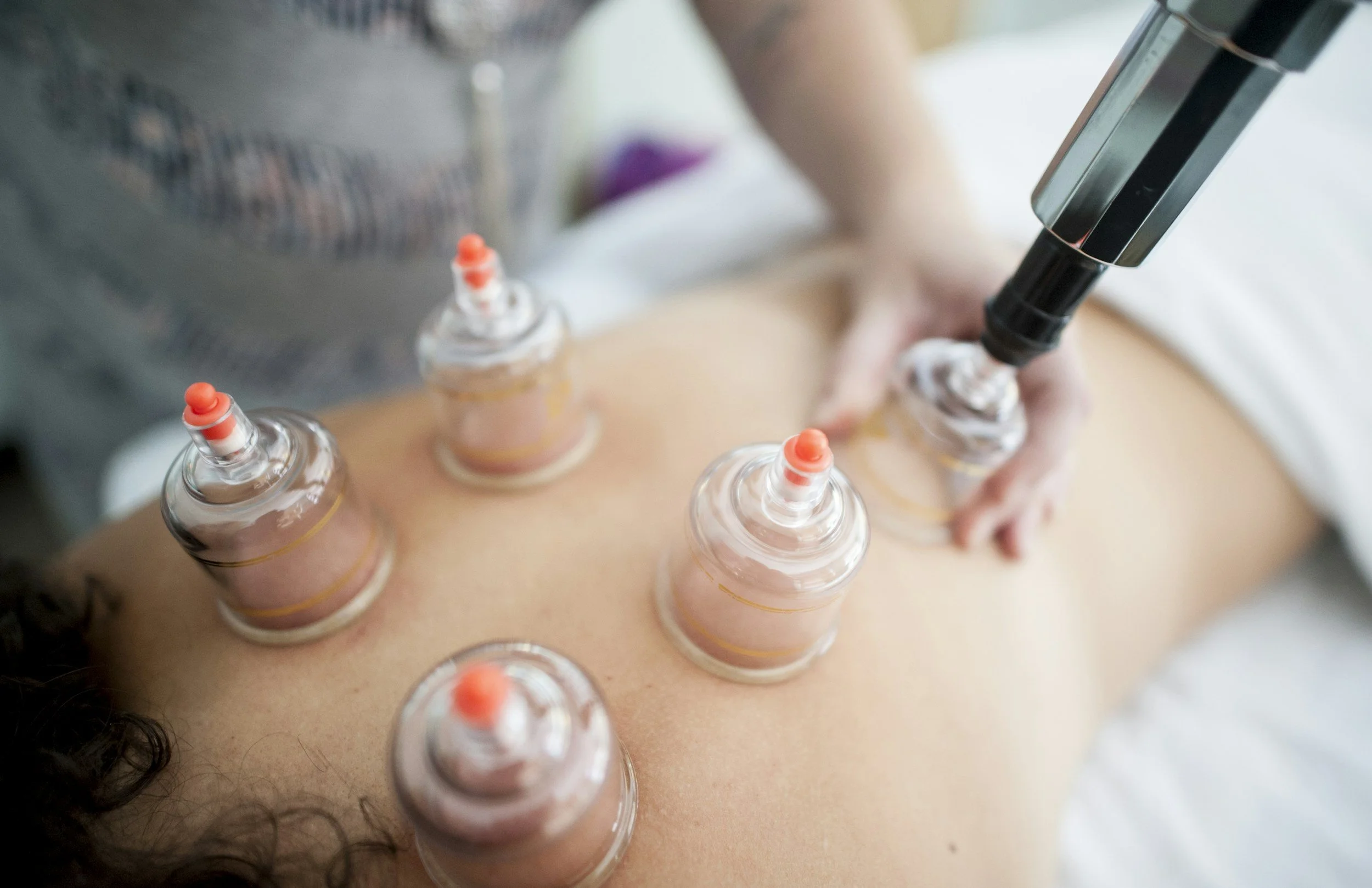
Myofascial cupping, like myofascial therapy, releases tension in the connective tissue (fascia). Using this modality, the therapist will place cups over fascial restrictions and create a vacuum to pull tissue upward and hold it in that position. This process lifts the fascia and muscle, creating space in the tissue for increased blood flow and release. Typically, light oil or cream is used to prevent pinching. After a session, red spots are typically left where the cups were located. They will fade over 3-7 days. Myofascial cupping can be an entire session or integrated into other sessions as an add-on.
